



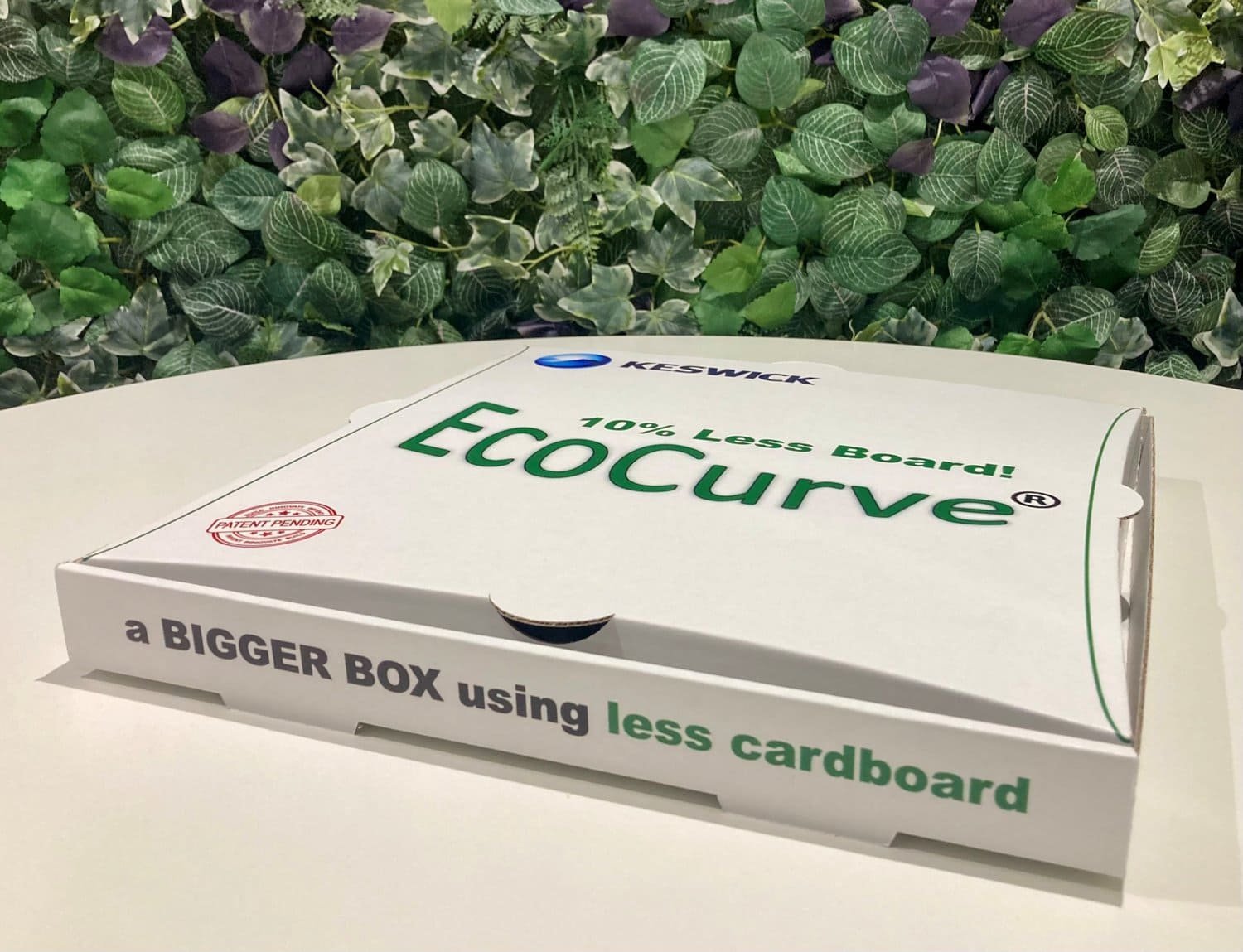
In the drive towards more sustainable packaging, attention often focuses on new materials and emerging technologies. Yet one of the most effective ways to reduce environmental impact is simply to use less material while maintaining the same performance.
That philosophy lies behind EcoCurve, a patented redesign of the traditional corrugated pizza box. Through innovative structural engineering, EcoCurve reduces the amount of corrugated board required by approximately 10% compared with a conventional pizza box, while maintaining the strength, functionality and ease of use expected by manufacturers, retailers and consumers.
Although a 10% reduction may seem modest for a single box, the environmental impact becomes substantial when multiplied across the billions of pizza boxes produced worldwide each year. Less corrugated board means fewer natural resources consumed, lower energy and water usage during paper manufacture, and a measurable reduction in carbon emissions associated with producing every box.
The sustainability benefits continue throughout the supply chain. Smaller, lighter box blanks reduce the volume and weight of material transported from paper mill to box converter, from converter to distributor, and finally to pizza operators. Improved vehicle loading efficiencies and reduced material volumes contribute to lower transport-related CO₂ emissions, while requiring less warehouse storage space throughout the distribution network. Every stage of the supply chain benefits from greater material efficiency.
Importantly, EcoCurve has been designed to fit seamlessly into existing manufacturing and food-service operations. It delivers the familiar performance expected of a pizza box without requiring new production equipment or changes to established handling procedures. This allows manufacturers and restaurant operators to improve sustainability without introducing additional complexity or cost.
As packaging legislation continues to evolve, including the introduction of Extended Producer Responsibility (EPR) schemes in many markets, reducing packaging weight has become increasingly valuable. Using less board not only reduces environmental impact but can also lower packaging-related compliance costs, demonstrating that sustainability and commercial advantage can go hand in hand.
The innovation has attracted growing international interest. EcoCurve is protected through international Patent Cooperation Treaty (PCT) patent filings, reflecting its global commercial potential. The British design which is manufactured under licence by Ankutsan Packaging is already being introduced by two well-known UK pizza chains, while several overseas pizza businesses have secured option agreements as they evaluate the technology for their own markets.
Industry recognition has followed. EcoCurve has been nominated in two categories at the forthcoming London Packaging Week Awards, acknowledging both the technical innovation behind the design and its contribution towards more sustainable packaging.
EcoCurve demonstrates that meaningful environmental progress does not always require revolutionary new materials or complex manufacturing processes. Sometimes the greatest advances come from rethinking a familiar product that has remained largely unchanged for decades.
By reducing material consumption, lowering carbon emissions across manufacturing and logistics, improving supply chain efficiency and supporting the circular economy through responsible resource use, EcoCurve illustrates how thoughtful engineering can deliver practical, commercially viable sustainability benefits for the global food-service industry. As businesses seek lower-carbon packaging solutions, innovations that achieve more with less material are likely to become an increasingly important part of the industry’s future.
