



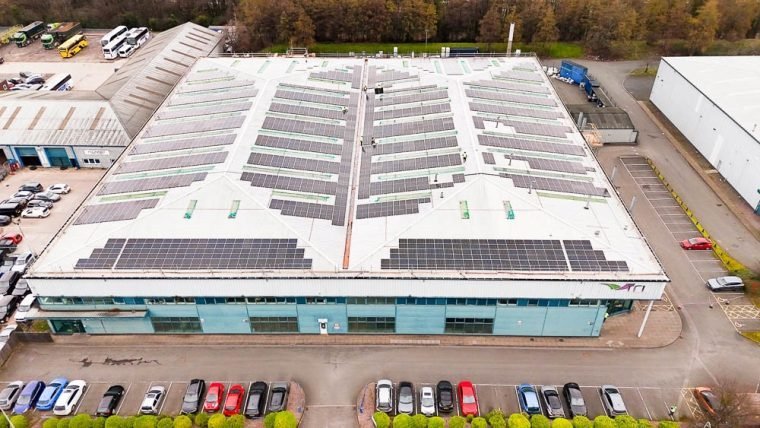
TCL Packaging, a leading UK manufacturer of flexible plastic packaging for food and non-food products, has installed a 1,176-panel rooftop solar system at its factory in Telford. The system, which uses innovative DC-optimised inverter technology to meet strict insurer-mandated safety standards, is forecast to cut carbon emissions by an expected 95 tonnes per year.
The project marks a major milestone in TCL Packaging’s mission to meet growing customer demand for more sustainable packaging while also keeping rising energy costs under control. The Telford facility consumes 1.4GWh of electricity annually due to the energy-intensive processes used in flexible plastic packaging production.
“We serve customers across several major FMCG sectors where sustainability is a top priority. Switching to solar power will allow us to offer a more sustainable supply chain, strengthening our competitive position,” says John Hallett, Compliance Manager at TCL Packaging. “When we first looked into solar a few years ago, the payback period was around seven years. With electricity costs now almost three times higher, we expect to see a much faster return on our investment, making now the ideal time to invest.”
Safety was a critical consideration for TCL Packaging due to the large volume of highly flammable solvents used during manufacturing. The project tender specified SolarEdge DC-optimised inverter technology to meet the rigorous safety standards set by the company’s insurers, landlord surveyors and fire-risk assessors. Installer Mypower was awarded the contract because of its extensive experience in installing SolarEdge systems and its strong focus on safety.
“We are pleased to have delivered this project for TCL Packaging. We rely on SolarEdge technology for its proven reliability, optimised energy efficiency and industry-leading safety features,” says Ben Harrison, Managing Director at Mypower. “These are the non-negotiables that enabled us to design a rooftop array that not only meets the strictest safety standards but also maximises energy production, delivering peace of mind along with significant cost and carbon savings for the factory.”
The SolarEdge system features a suite of built-in safety features designed to provide optimal protection without the need for additional hardware. These include Sense Connect™ arc-fault detection and prevention technology, and SafeDC™, which is designed to automatically reduce panel voltage to touch-safe levels to provide safer roof access for maintenance teams and firefighters. For added reassurance, Mypower also installed a SolarEdge Firefighter Gateway. This is integrated with the building’s alarm panel to enable rapid, system-wide shutdown in the event of a fire alarm.
The DC-optimised technology is also designed to maximise energy production, even on complex rooftops such as TCL’s. The roof features east-, west- and south-facing sections and is heavily congested with chimneys and other obstructions, all factors that can severely limit energy production in traditional string inverter systems.
In traditional systems, all panels must be installed at the same angle and orientation, while shading on a single panel can reduce the performance of every connected panel. SolarEdge overcomes these limitations with Power Optimizers installed beneath each panel pair, allowing them to operate independently from others on the same string. As a result, shading affects only the impacted panels, while the rest of the system continues to perform at full capacity. This also allows panels to be placed at different angles, presenting far greater design and installation flexibility.
“Thanks to the design flexibility offered by this technology, we were able to install panels across 80% of the factory roof,” comments Harrison at Mypower. “As a result, the system is expected to offset around 26% of TCL’s electricity use – a significant achievement for such a high-energy-use facility.”
