



As packaging formats become more varied, converters need equipment that can handle complexity without slowing the line By: Dominic Jones, Senior Technical Trainer, Thacker Industrial Service Co.
Corrugated converting used to reward long, repeatable runs. A plant could set up a folder gluer for a familiar box style, run volume for hours, then move on to the next job with a fairly predictable changeover. That world has not disappeared, but many converters are now being asked to produce a wider mix of box styles with tighter lead times and smaller order quantities.
E-commerce has changed expectations for shipping formats. Retailers want packaging that arrives ready for display. Food and beverage brands often need multipacks, trays, and coated packaging that can hold up under real handling conditions. Some customers bring box designs with small panels, added folds, unusual lengths, or tighter dimensional requirements. These jobs can be profitable, but only if the converting process can keep up.
That is where specialty folder gluers become important. Their value comes from helping box plants move beyond basic straight-line work while still protecting throughput, quality, and labor efficiency. For many converters, the real question is whether they can run a complex box consistently, quickly, and profitably, not simply whether they can run it at all.
What Makes a Folder Gluer “Specialty”?
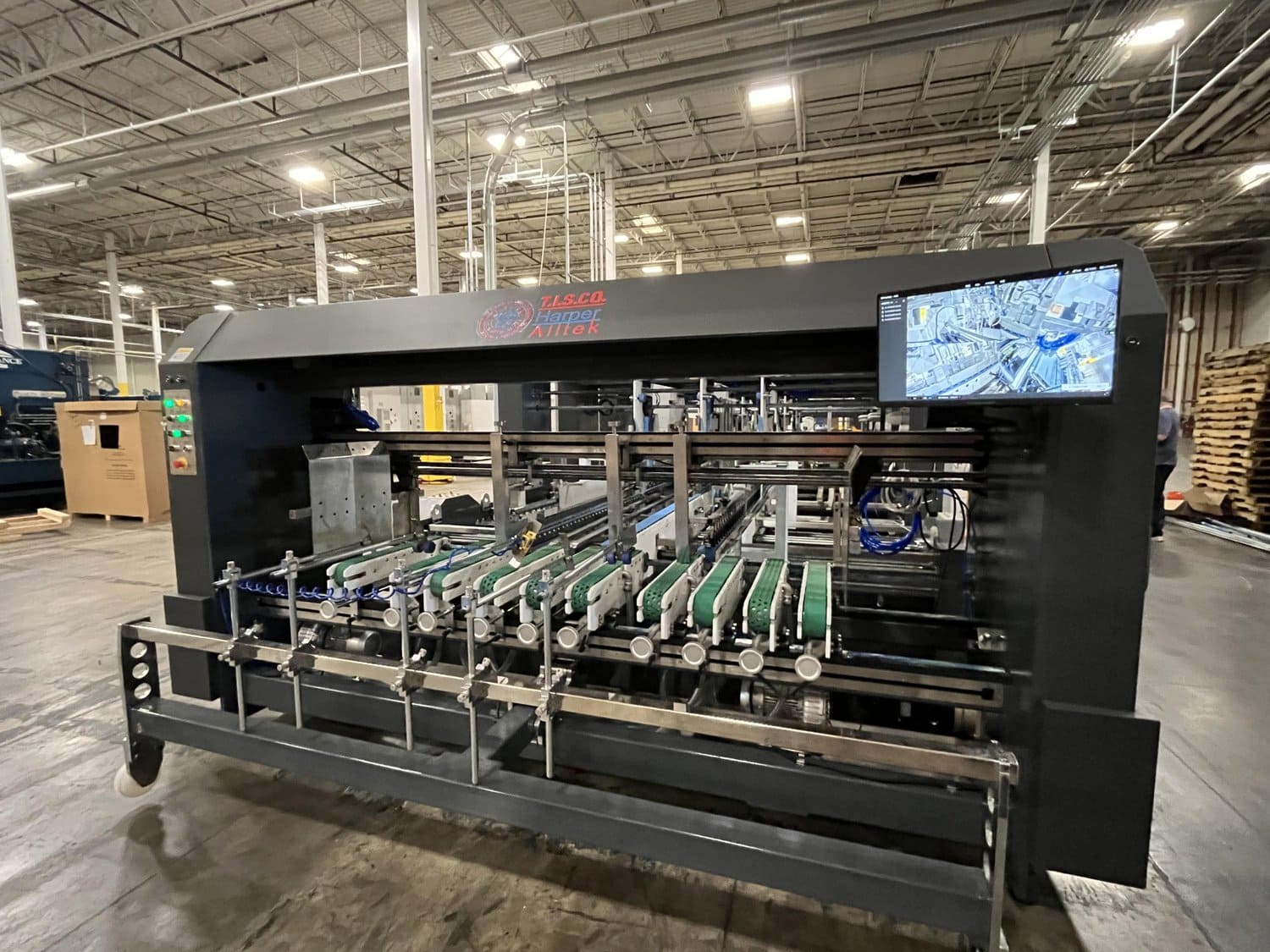
Specialty folder gluers help converters manage more complex box formats without sacrificing production flow.
A standard folder gluer is typically built around simpler work. It may be well suited for one glue line and one primary fold. That is enough for many common box styles, but it limits what a converter can bring in-house when customers start asking for more complex structures.
A specialty folder gluer expands that range. It can support formats such as 4-corner boxes, 6-corner boxes, trays, lock-bottom boxes, double side glue work, and back fold applications. These formats often require more than one glue line, along with timed folding sequences, programmable back folds, and tighter control over how each blank moves from section to section.
This distinction matters because specialty packaging tends to expose the limits of basic equipment. If a fold is forced at the wrong moment, a small panel can rip. If a long box is not supported through the machine, it can drift or lag before it reaches the next section. Shallow scores can lead to cracking during folding, while boxes with multiple glue points often require more precise timing than a standard gluer can deliver.
Feed control and alignment help keep blanks stable before they reach the folding and gluing sections.
A specialty folder gluer gives operators more control over those variables. Feed control and alignment help stabilize the blank early in the process. Driven belts, back fold timing, scoring support, and glue application then help carry that control through the rest of the machine. When those systems work together, a challenging box becomes repeatable production rather than a slow, high-skill exception.
Why Setup Time Shapes Profitability
The business case for specialty folder gluers often starts with setup time. Complex box work can look attractive on paper, but long changeovers quickly cut into the margin. If a job requires several people to install heavy tooling, adjust multiple sections, and fight the machine into alignment, the plant may lose hours before sellable production begins.
That setup burden becomes harder to absorb as run lengths shrink. A four hour setup may have been tolerable on a very long run. It becomes painful when the order is smaller, more customized, or part of a rotating group of SKUs. In that environment, changeover speed affects how many jobs the plant can accept and how confidently it can schedule the line.
Tooling design plays a major role here. If a lock-bottom setup requires many pieces, multiple operators, and awkward handling, the machine becomes dependent on the availability of experienced people. Lighter tooling and simpler setup procedures make specialty work more accessible. They also reduce the risk that a profitable job becomes unprofitable before production even starts.
In many plants, older specialty setups can take four to six hours and require two or three people to install heavy, multi‑piece tooling. Newer systems that use lighter tooling and fewer pieces can bring that changeover time down to well under an hour on complex back fold and lock‑bottom work, often with a single operator instead of a small crew.
Setup time also connects directly to runtime. Every minute spent preparing the machine is time the machine is not producing. Faster setup reduces downtime and helps the plant move into sellable output sooner. That creates more room in the schedule for additional orders, rush jobs, and short run work that might otherwise be difficult to justify.
Keeping the Blank Under Control
Reliable specialty production depends on more than the first fold. The blank must stay controlled from feeding through delivery. If control is lost early, every downstream section has to compensate. That usually shows up as skewing, poor fold registration, glue placement issues, crushed blanks, or inconsistent stacking.
Feeding is one of the first places where control matters. A machine with more robust feed control can better manage how the blank enters the line, especially at higher speeds. Alignment sections also help by registering the blank before it reaches the folding or gluing areas. That gives the rest of the machine a more consistent starting point.
One practical detail is the number of feeder gates. A three‑gate design, rather than the more common two‑gate approach, holds blanks more securely as they enter the machine, reduces skew at the infeed, and supports higher running speeds on complex work.
Center support is another important detail. When boxes move quickly, the middle of the blank can lag or behave differently than the edges. A center carrier that runs through the machine can help keep the blank stable as speed increases. That stability becomes especially important for long boxes, small panels, and formats that need precise folding sequences.
Once the blank reaches the folding section, servo‑driven, variable‑speed belts give operators another layer of adjustment. If one side of the box needs to move slightly faster or slower to lock the fold together, the operator can tune that movement instead of relying on a fixed mechanical path. This kind of control can make the difference between a box that technically runs and a box that runs well.
Scoring support can also protect finished quality. If scores from an upstream process are too shallow or if paper is dry and prone to cracking, the folder gluer may need to help the material fold cleanly. The ability to deepen a score or apply a controlled light mist directly on the score line can reduce cracking and tearing, which in turn cuts down on quality‑related customer rejects.
Matching the Machine to the Work
For converters evaluating specialty folder gluers, model selection should begin with the work the plant wants to win. Box size, board type, run length, labor availability, and customer mix all influence the right choice. A plant focused on smaller specialty boxes may not need the same machine width as a plant running larger e-commerce shippers, flooring boxes, or oversized retail packaging.
That is why specialty gluer selection is often most useful when it is tied to both equipment capability and real production support. Thacker Industrial Service Company, also known as TISCO, works with corrugated plants across machinery, service, installation, training, and lifecycle support, giving it a practical view of how converting equipment performs once it reaches the floor. Its product line includes TS folder gluers designed for specialty corrugated work, including the TS 74 and TS 115.
Both models are built for automatic continuous feeding and can run cardboard from 250 to 1200 gsm as well as E, C, B, and AB flute corrugated board. The TS 74 is positioned for smaller box work and offers a listed maximum mechanical speed of 300 m/min, while the TS 115 supports larger formats with a listed maximum mechanical speed of 200 m/min and can still run the smaller work that might otherwise be assigned to the TS 74.
Specialty folder gluers expand the range of box styles that converters can produce in-house.
The feature set is where the broader production value comes into focus. TISCO’s specialty folder gluers include capabilities such as servo‑driven sections for precise timing, automatic continuous feeding, bottom‑lock and 4/6‑corner configurations, folding sections with adjustable belt control, and trombone and press sections that support finished quality. The machines support both glue wheels and non‑contact glue systems, giving plants flexibility to match adhesive application to each job’s requirements.
The trombone and press areas are especially important at the end of the process. The trombone section helps move boxes cleanly toward delivery, while the press section applies controlled pressure so the finished box has a cleaner bond and more consistent form. Counting, kicking, or spray‑marking functions can also reduce the amount of manual handling required at the back of the machine. Plants can, for example, flag every 10th or 20th box for quick visual checks, which supports quality control and can reduce the number of people needed for delivery and inspection.
Setup efficiency and operator control are central to profitable short-run specialty work.
Operator support should be part of the decision as well. Specialty work can demand a high skill level, particularly when boxes have small panels or unusual folds. A machine that allows timing adjustments, secure fold control, and more forgiving setup can help less experienced operators run standard specialty jobs. More difficult designs will still call for strong operator knowledge, which is why training remains so closely tied to equipment performance. That balance lets plants reserve their most experienced people for the toughest box styles while still keeping everyday specialty work moving.
Building Flexibility into Corrugated Converting
Specialty folder gluers give converters a way to pursue more demanding work without treating every complex design like an exception. As packaging takes on more responsibility for shipping performance, shelf presentation, and brand experience, that flexibility becomes a practical advantage.
The opportunity will look different from plant to plant. One converter may be chasing e-commerce shippers. Another may be focused on multipacks, retail displays, wine boxes, or long format packaging. In each case, the value comes from being able to move from possibility to production without losing confidence in the run. For many specialty lines, it has become rare to turn away a box design solely because the folder gluer cannot support the structure.
That is where specialty folder gluers can change the economics of complex work. They help converters protect the margin on jobs that might otherwise be slowed down by setup, labor demands, or inconsistent quality. As box designs continue to diversify, the plants best positioned to compete will be the ones that can adapt quickly, lean on strong equipment and training partners, and still keep production moving.
