



As we explore ways to reduce waste and its impact on our planet, effective deposit return systems (DRSs) for drink container recycling and reverse vending machines (RVMs) have a key role to play. There is genuine consumer appetite to recycle and re-use when the right processes and initiatives are in place.
Fundamental to achieving this is ensuring reverse vending machines (which accept empty beverage containers such as aluminum cans and glass or plastic bottles for recycling, in exchange for the deposit paid on the beverage containers) are both efficient and intuitive for the recycler.
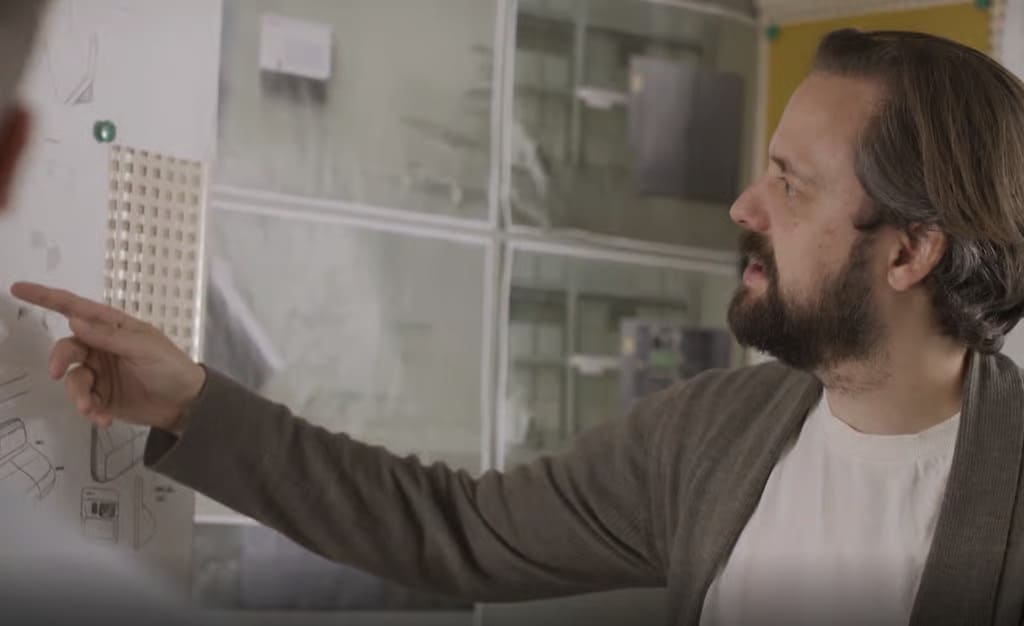
That’s why reverse vending machine design always has the consumer experience front of mind, as Anders Ertsås, Design Manager at TOMRA Collection (right), explains.
The first of TOMRA Collection’s reverse vending machine design principles is simple: quality. Having manufactured its very first reverse vending machine in 1972, the business has more than 50 years’ experience in the market, during which it has revolutionized and transformed the recycling experience with its cutting-edge RVMs.
“We believe we create the best products in the market. It’s a high-quality product and we want it to be perceived and experienced as such by all those who use it. From an aesthetic perspective, this means we focus on creating a well-refined visual expression. Clean forms with a sharp appearance help us convey the RVMs’ premium quality,” says Anders Ertsås.
“It also reinforces another core principle, of ‘amiability’ – the machine must be approachable and easy to use, rather than complex or intimidating. User-testing and watching people interact with RVMs has driven our design approach and influenced features and functionality, with machines that greet users and provide key information on how to use the machine. New RVMs must still bring a sense of familiarity or it could impact usage rates, reducing the amount of beverage containers returned for recycling, There is also always an important balance to be struck between functionality and the ‘beauty’ of the design.”
These principles are exemplified by the game-changing TOMRA R2 RVM – one of the most consequential design changes Anders has worked on. With multi-feed reverse vending machines, consumers no longer feed containers in one at a time, but instead pour all their containers in at once. The machine can sort through a multitude of cans and glass/plastic bottles rapidly, so for recyclers it saves time, effort, and even sticky hands as containers don’t need to be touched.
Elsewhere in its product range, TOMRA recently released TOMRA B7. This has been designed to accept PET, cans, glass bottles and reusable bottles, while boasting a compact footprint of just 1.3 square meters. In doing so, TOMRA has created an entry-level solution for smaller and independent stores that offers them the right quality and capabilities for their needs.
TOMRA Collection has also won awards for its user-centric product design, winning both the Red Dot Design Award and iF Design Award in 2024 for the TOMRA RollPac container storage solution. TOMRA RollPac received recognition as an efficient solution and great user experience that seeks to understand and solve the needs of retail customers.
A focus on accessibility in reverse vending machine design
Another key design principle behind TOMRA Collection’s reverse vending machine design is inclusivity. Ensuring as many people as possible can easily use the product is fundamental. Regulatory changes are placing an enhanced framework, awareness and expectations around the accessibility requirements that manufacturers need to consider, too. TOMRA is closely monitoring the legal landscape in the regions we operate to understand and anticipate how it affects and improves the inclusive design process.
When it comes to designing reverse vending machines, it should be just as easy to return the containers as it was to buy the drink in the first place – and this should be the case for as many users as possible. Anders Ertsås ,Design Manager at TOMRA Collection
TOMRA also relies on testing user experiences with diverse groups of test subjects. A good example of this is in the design of TOMRA R1 and TOMRA R2. As a starting point, the design team followed the Americans with Disabilities Act (ADA) height requirements, creating a machine with a lower in-feed (container insertion) height for containers, making them more accessible for wheelchair users. As it was important to truly understand the needs of wheelchair users, the design team involved and tested directly with them throughout the process.
“Our observations around positioning led to the unique overhanging in-feed of TOMRA R2 (right), which enables users in wheelchairs to use the reverse vending machine front on, rather than having to lean far over or sit next to the machine in order to pour in their containers,” explains Anders Ertsås.
These adaptations were implemented following in-house testing, using a sample of recyclers including elderly people, wheelchair users and people with visual impairments, autism or multiple sclerosis.
“It’s essential we understand the recycling experience of different users first hand. It confirms the design choices we have made are having their intended effect. It also helps us identify where there is room for further improvement,” added Anders Ertsås.
Designing sustainability into reverse vending machines
As a business with a mission to bring about a world without waste, it should come as no surprise that sustainability is another of the core principles in TOMRA’s approach to reverse vending machine design.
The materials used in RVM manufacturing impact its sustainability. For example, choosing to use recycled plastics can have a big impact. On TOMRA R2, for example, the team replaced many of the polymers with recycled materials. This is a job they are continuing, with the goal of replacing more and more polymers. The use of paint is also carefully considered so that it is not used unnecessarily – for example, portions of the back-end of the machine are unpainted and use galvanized steel instead.
TOMRA is also working to reduce the power consumption of its machines, as Anders Ertsås explains: “Power consumption is an important consideration when it comes to sustainability, and it’s something we can impact from a design perspective. For example, we have implemented proximity sensors so that the machine only lights up when people are approaching to use it, with the machine able to go into a more energy-efficient rest mode in between.”
We are working together with our colleagues across the business to continue to innovate even more sustainable solutions in the future. Anders Ertsås, Design Manager at TOMRA Collection
Elevating effectiveness in reverse vending machine design
Perhaps the most important consideration is effectiveness – and not just for recycling consumers, but also for the retailers who offer TOMRA reverse vending machines.
“It’s so important to consider the user experience for the retail staff, too. We don’t want a situation where machines may be temperamental or unreliable, which can cause customer frustration and put staff under pressure,” explains Anders Ertsås. “We must also consider the setting and context within which our products will be placed – so as well as creating a simple and effective user interface, we must meet the needs of the retail stores.”
For example, in TOMRA R2, the discreet and compact wall-mount format makes it less obtrusive in the retail space. In TOMRA R2, all of the in-store cleaning and servicing is done from the backroom rather than the front, consumer-facing side (right).
“We moved the service entrance to the back so issues could be resolved away from the pressure of the shop floor,” said Anders Ertsås. “This creates a better solution for everyone.”
A universal offering
Effective reverse vending design is crucial to TOMRA’s growth across global markets, helping to create more opportunities to boost recycling rates in new locations where deposit return systems are emerging.
To do this, creating a product base that is suitable for a wide range of markets is key – but also poses one of the biggest challenges for Anders and his team.
“TOMRA Collection is already in 60+ markets, and we are continuing to move into new markets. In the next few years, more European markets will introduce deposit return schemes for recycling, and it’s our responsibility to create products that can fit a wide range of needs and market requirements. At the same time, each market has a different deposit return system with different legislation and different needs, so we can’t have a ‘one-size-fits-all’ solution. But what we can do is find commonality between these markets so that our solutions are best placed to meet their recycling needs. It is an interesting challenge that we are excited to work with.”
It is within this context that TOMRA’s fundamental design principles become even more important. They embed scalability by incorporating a design and user experience that can translate across borders, providing the foundation required to drive cross-market growth.
“We do offer certain modifications for specific markets, such as glass kits for our TOMRA R2 model in markets that have glass in their deposit return systems, but the general approach is to ensure that any differences are in the nuances rather than in the foundations of the product. Creating a product with universal appeal and usability across markets is our aim; it’s from that foundation that we’re going to be able to help create a wider culture of recycling and re-use across markets,” adds Anders Ertsås.
Designs on the future
As Anders Ertsås and his team continue to innovate to bring TOMRA’s products to new markets, what motivates him to continue?
“It’s what we deliver. The machines we create are truly interesting because we need to think about them from not only a technical perspective, but also a very human one. The machines reach everyone from my four-year-old child to my 90-year-old granddad – both in their application and in the wider environmental challenges they are helping to address through recycling and reducing waste and especially plastic waste,” explains Anders Ertsås.
Working at TOMRA is also a really collaborative environment. We often sit together with multi-disciplinary teams to innovate together and find solutions to really quite complex challenges, which is exceptionally satisfying. For anyone who enjoys being curious and problem solving, it’s an incredibly engaging field to work in. Anders Ertsås, Design Manager at TOMRA Collection
At a time when the environmental challenges the world faces are substantial, such as resource scarcity and rising plastic waste, the importance of innovators who are working to create and refine solutions is greater than ever. By placing people at the heart of their approach, TOMRA is continuing to lead in the field of reverse vending machines and recycling – harnessing principles of design that embed quality while making a tangible environmental impact.
