



As public stakeholders progressively publish their conclusions on the carbon footprint and recyclability of recycled zamak, including Citeo which, through the publication of its recyclability guidelines for glass and aluminium via COTREM and COTREV, has officially reclassified zamak from orange to green, Segede is reinforcing the competitiveness of its European offering in parallel with its Chinese plant. The objective is clear: to provide brands with a French-quality industrial model at competitive prices through a hybrid production approach coordinated between France and China. Segede thus remains fully aligned with its core mission as a French foundry, with recognised expertise in metal injection and transformation, including aluminium, steel, brass, tin and, naturally, zamak.
Recent developments around zamak have been marked by an official statement from Citeo confirming its recyclability and upgrading it from the orange to the green category in the recyclability guide for glass and aluminium packaging published by COTREM and COTREV. This announcement is particularly significant ahead of the official publications expected from the CEN in 2028 and fully authorises brands to place zamak packaging on the market. It should be recalled that the new European regulation on packaging and packaging waste, the Packaging and Packaging Waste Regulation (PPWR), aims to harmonise and strengthen sustainability requirements for household, industrial and commercial packaging across Europe. All packaging manufactured, supplied, imported or distributed within the European Union will be required to be recyclable by 2030 and 2035.
Serving brands
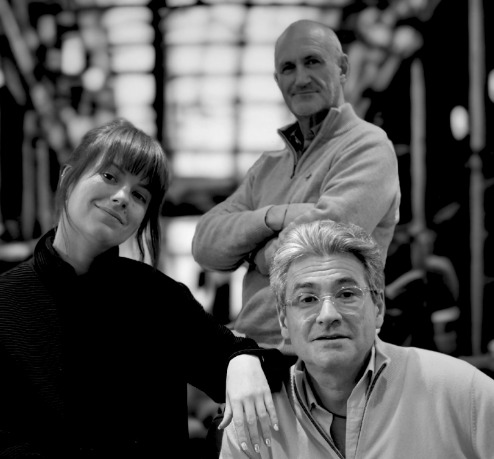
“Working with China makes sense when production is transparent and guaranteed. Conversely, why manufacture in China a product that France is capable of producing at the same price?” comments Patrick Trescartes.
Segede operates a twin factory in China, whose teams are part of the same group. Production methods are harmonised across both continents, while quality control remains under French supervision. Segede proudly reaffirms its origins as a French foundry, initially specialised in precious metals for fine metalwork, before expanding into the transformation of all metals, from aluminium, brass, steel and tin to zamak, whose relevance is once again in the spotlight. Segede serves the wines and spirits and perfumery markets, while also producing lifestyle objects, accessories and technical components.
Hybrid European and Chinese production model
Building on recent European sourcing initiatives, Segede is strengthening the competitiveness of its made-in-France offering, particularly for specific decorative elements. Its ambition is to systematically provide clients with alternative production options, either European or Chinese, in order to design a hybrid offering at every stage of the value chain. Criteria such as rotational shapes, decorative techniques and their application methods, the level of automation required for each operation, and brands’ ESG commitments are all taken into consideration.
Within this framework, Segede also offers sourcing of zamak or aluminium with up to 90 percent recycled content, in compliance with ISO 14021 standards, including full traceability and total carbon footprint calculations. This approach is designed to meet future requirements related to the Digital Product Passport and the PPWR. This strategic positioning represents a powerful lever for brands, which are already recognising its advantages and identifying opportunities to relocate part of their production closer to Europe.
